How does an SSL/TLS certificate work?
An SSL/TLS certificate operates using cryptography. When a user visits a TLS-secured website, the server sends the certificate to the browser, which verifies its authenticity. A secure, encrypted connection is then established via the HTTPS (HyperText Transfer Protocol Secure) protocol. This ensures that data is transmitted securely and confidentially.
The process involves:
- Identity verification: The certificate is issued by trusted organizations, known as Certificate Authorities (CAs), which confirm that the website belongs to a legitimate entity.
- Data encryption: Information is encoded, making it unreadable to unauthorized parties.
- Data integrity: TLS ensures that data is not altered during transmission.
Why is an SSL/TLS certificate important?
- User security: Protects sensitive data, such as login credentials or credit card numbers.
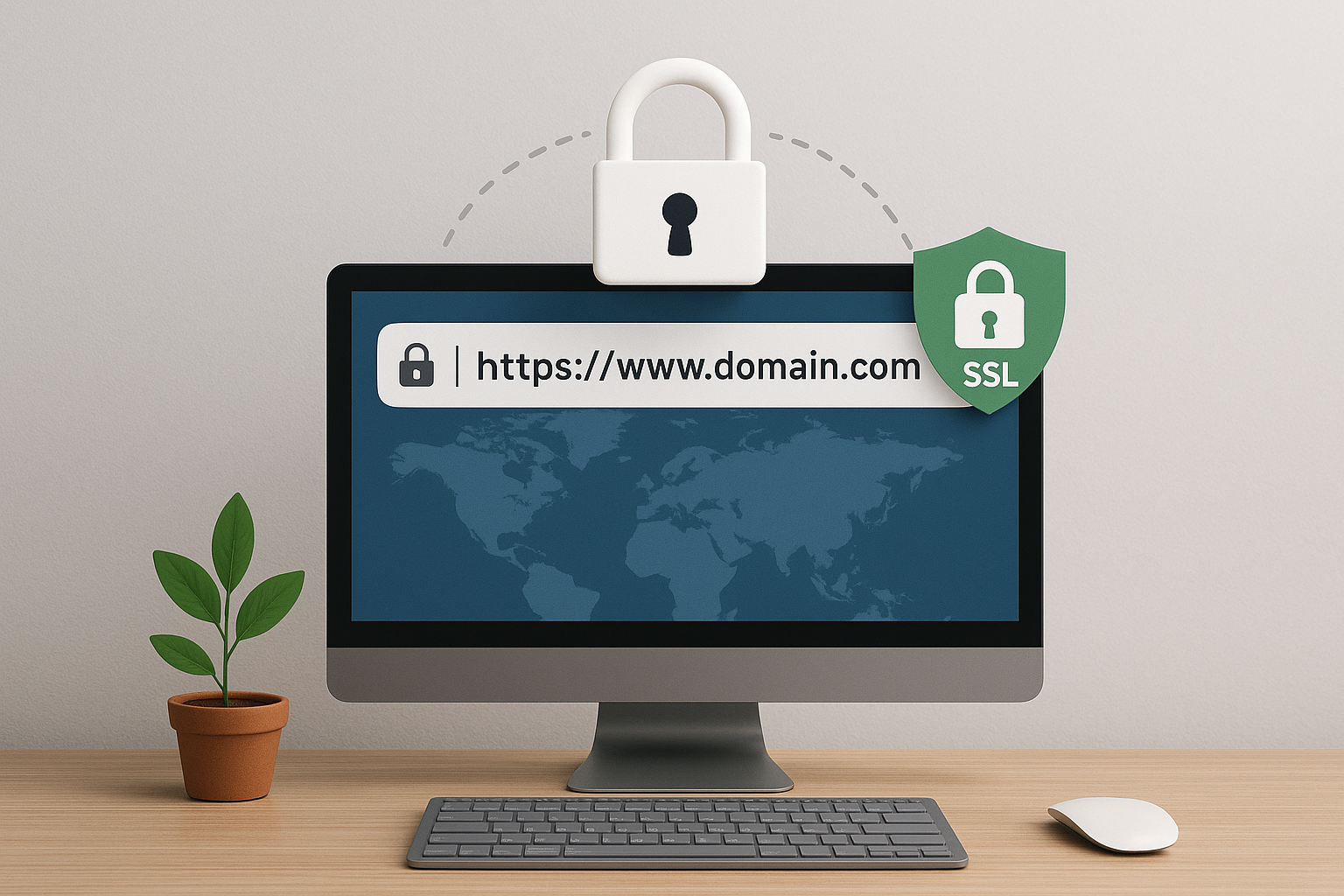
- Trust and credibility: TLS-secured sites display a padlock and “https://” in the address bar, building trust among visitors.
- SEO: Search engines like Google favor TLS-secured sites, which can improve search result rankings.
- Compliance with regulations: TLS is often required for compliance with regulations like GDPR, as a standard for protecting personal data transmission.
Types of SSL/TLS certificates
There are several types of SSL/TLS certificates tailored to different needs:
- DV (Domain Validated): A basic certificate that verifies only the domain. Ideal for small websites and blogs.
- OV (Organization Validated): Verifies both the domain and company details. Recommended for businesses and organizations.
- EV (Extended Validation): The highest level of verification, requiring thorough company checks. Although browsers previously highlighted EV certificates (e.g., with a green bar showing the company name), there is no longer a visual distinction in the user interface. Used by banks and large online stores.
- Wildcard SSL/TLS: Secures the main domain and all its subdomains.
- Multi-Domain SSL/TLS: Protects multiple domains under a single certificate.
Can an SSL/TLS certificate be free?
SSL/TLS certificates can be either paid or free, depending on the provider and certificate type. Free certificates, such as those offered by Let’s Encrypt, are popular among owners of small websites and blogs as they provide basic encryption at no cost. However, they have a shorter validity period (e.g., 90 days), though Let’s Encrypt supports automatic renewals via hosting tools or scripts like cron jobs, minimizing the risk of expiration. Paid certificates, offered by providers like DigiCert or Comodo, provide additional features such as higher verification levels, technical support, or insurance. The choice between free and paid certificates depends on your website’s needs and the level of trust you want to instill in users.
What is a Let’s Encrypt certificate, and is it worth using?
Let’s Encrypt is a Certificate Authority (CA) that offers free SSL/TLS certificates, supported by organizations like Mozilla, Google, and Cisco. Let’s Encrypt certificates are fully functional, providing encryption comparable to paid certificates and are automatically renewed by most hosting providers. They are particularly recommended for small websites, blogs, or startups looking to implement TLS without incurring costs. However, they have limitations: they offer only Domain Validation (DV) and lack technical support. They are worth using if you prioritize simplicity and cost savings, but for more advanced needs (e.g., e-commerce), paid OV or EV certificates may be a better choice.
How to implement an SSL/TLS certificate?
- Choose the right certificate: Decide which type best suits your needs.
- Purchase the certificate: You can obtain it from providers like Let’s Encrypt (free), DigiCert, or Comodo.
- Verify the domain: Depending on the certificate type, domain or company verification may be required.
- Install the certificate: Configure it on your hosting server (many hosting providers offer automatic installation).
- Redirect to HTTPS: Ensure the entire site operates over HTTPS to avoid errors.
Summary
An SSL/TLS certificate is a critical component of any modern website. It not only enhances security but also builds user trust and improves search engine visibility. Implementing TLS is straightforward and accessible even for small websites, thanks to free solutions like Let’s Encrypt. In today’s world, the absence of TLS is a risk not worth taking. If you encounter issues, such as installing a certificate for your site, reach out to specialists like our company—we’re here to help!